
Notes from Bloom
Online vs. In-Person Therapy: How to Decide What Fits Your Needs
Virtual & Telehealth Therapy
Written by Danny Trip, LMSW
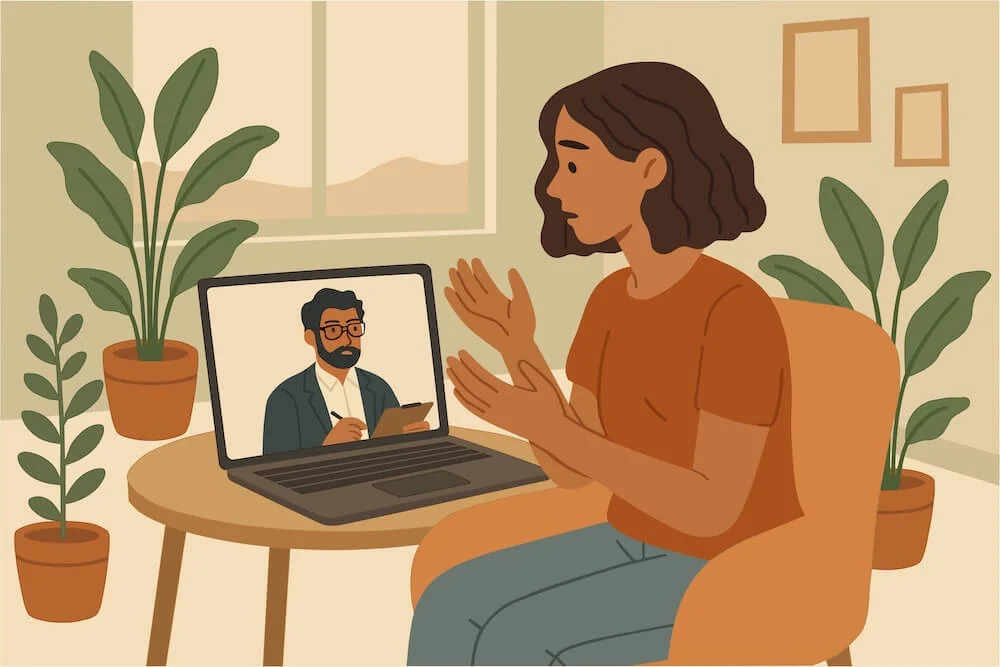
Online and in-person therapy offer different settings for the same important conversation. Understanding the practical benefits and limitations of each can help you decide which format fits your needs, your circumstances, and what you want to work on.
You may prefer one format or find that a combination works better. The choice is something you can discuss with your therapist rather than something you need to have completely figured out before you begin.
What Is Different About Online Therapy?
Online therapy, also called telehealth or virtual therapy, allows you to meet with a therapist through a secure video connection rather than attending an appointment in person. For many people, virtual therapy can make counseling easier to fit into their schedule and daily life.
When Might Online Therapy Make Appointments Easier?
The main benefits of telehealth are accessibility and flexibility. Virtual appointments can reduce barriers related to busy schedules, traffic, transportation, and distance.
Busy Schedules and Transportation
One of the biggest challenges for clients trying to get therapy is finding the time. Virtual therapy can reduce the need to factor in travel time, locations, or traffic. Whether you have a demanding job, children, family responsibilities, or a regular 9-to-5 schedule, it can be difficult to find another meeting to fit into the day. Virtual therapy can provide flexibility when your schedule is already full.
Distance and Access to Care
Smaller towns and rural communities may have fewer available therapists and mental health resources. Telehealth can reduce the distance involved in attending appointments and provide an alternative to a long trip for every session.
When Might an In-Person Setting Be More Helpful?
Online therapy is not necessarily the right choice for everyone. It is worth considering whether the format supports your goals or creates barriers that make it harder to take part in the work.
Isolation and Avoidance
For some people, leaving their usual environment and going to another place is an important part of engaging in therapy. If isolation or avoidance is something you are working on, consider how the setting affects that work.
If virtual appointments seem to make it easier to withdraw or avoid something you want to address, bring that into the conversation with your therapist. Together, you can consider whether in-person sessions, online sessions, or a combination better supports your goals.
Distractions and Divided Attention
At home, your phone, other responsibilities, or people in your space may compete for your attention. It can be harder to stay present when you are also checking messages or trying to complete another task.
In-person therapy can create a separate space dedicated to focusing on therapy and the work you are doing.
Connection and Hands-On Activities
Communicating through a screen can change the sense of connection, and some activities, such as art-based interventions or play-based work, can be harder to engage in virtually. Ask your therapist how the format might affect the approaches you use together.
What Do You Need for a Virtual Therapy Session?
A Private Space
Confidentiality is an important consideration with virtual therapy. Therapy is a highly private and vulnerable time. In person, therapy offices are set up to protect privacy. In telehealth settings, however, clients also need to consider whether the space they are using is private.
Can someone hear you talking with your therapist? Can someone see you? Could someone enter the room unexpectedly? These are all things worth considering before beginning a virtual session.
A Stable Internet Connection
A stable internet connection is important for remote therapy. Without a stable connection, both client and clinician can struggle to stay on the same page. Glitches, pauses, or poor video quality can become a distraction and interfere with the session.
A Place Where You Feel Safe
Last, but definitely not least, you need a place where you feel safe. Therapy is a vulnerable space, and your environment should support that. If you feel guarded about the space you are occupying during your virtual therapy session, it may make it harder to be open and present during therapy.
Can You Switch Between In-Person and Virtual Appointments?
A client does not necessarily have to choose one format exclusively. Some clients use virtual therapy as their primary option, while others use a combination of in-person and virtual appointments.
Work, family responsibilities, illness, weather, or other unexpected changes can make having both options useful. At Bloom Wellness Group, you can discuss changing an in-person appointment to telehealth when circumstances make a virtual appointment more practical.
How Does the Format Affect the Conversation?
Therapists listen to your words and also pay attention to facial expressions, body language, and changes in how you present. When only part of your body is visible on screen, some of those cues can be harder to observe.
Your therapist also considers whether distractions or connection problems are interfering with the conversation. From your side, it helps to notice whether you feel comfortable, able to talk openly, and able to stay focused in the space you are using.
Our goal as therapists is to provide the best care we can. There is not one answer to whether virtual or in-person therapy is better for every person; there are different factors to consider together.
What About a Mental Health Crisis?
If someone is experiencing an immediate mental-health crisis or emergency, a routine telehealth appointment may not be the appropriate level of care. In those situations, immediate crisis or emergency services may be necessary.
Virtual therapy is not and should not be treated as immediate access to your therapist. It is simply a different form of how the service is being provided. Your therapist can discuss and help determine whether virtual or in-person treatment is appropriate for your circumstances.
Questions to Help You Choose
Before choosing virtual therapy, consider a few practical questions:
- Do I have a private place where I can talk openly?
- Do I have a reliable internet connection?
- Will I be able to stay focused during the session?
- Does being at home help me feel comfortable, or does it make it easier for me to avoid things?
- Would leaving my normal environment help me be more present in therapy?
- Would virtual therapy make it easier for me to attend consistently?
Choosing a Format That Supports Your Goals
No space or option is perfect. Think about what will help you attend consistently, feel comfortable, and take part in the work, then discuss those priorities with your therapist.
Learn about Bloom’s online therapy in Iowa and Illinois and the option of in-person appointments in Bettendorf.
Notes from Bloom.
Occasional writing on mental health, therapy, and what’s happening at the practice. No pressure, and you can unsubscribe any time.