
Notes from Bloom
Art Interventions in Therapy: When Words Aren’t Enough
Art in Therapy
Written by Danny Trip, LMSW
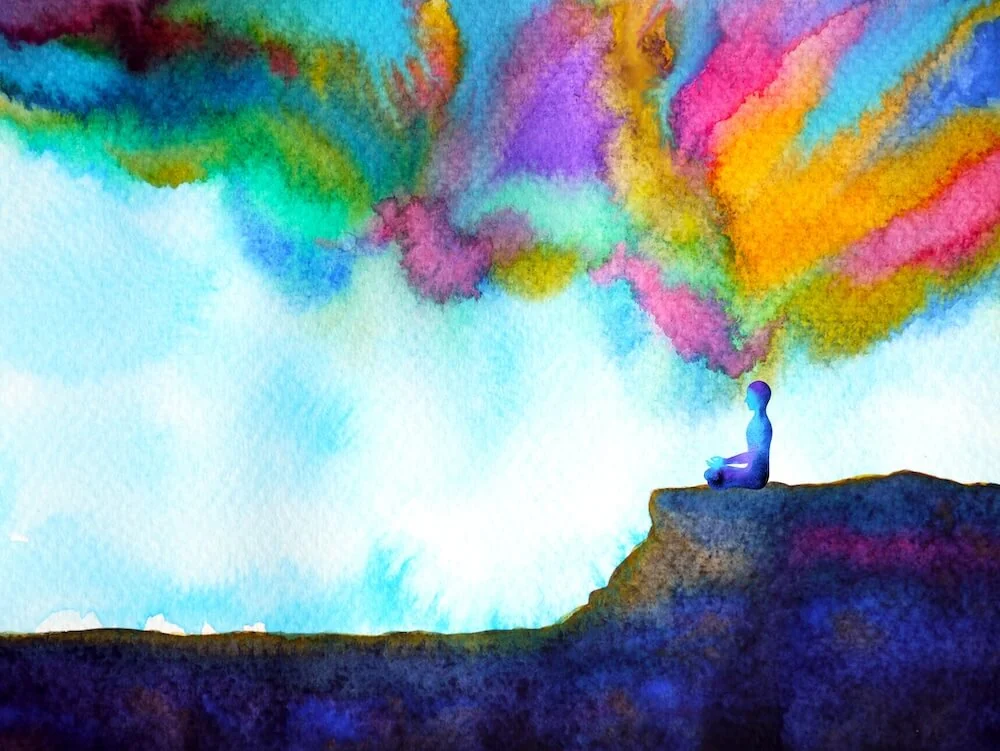
Sometimes it is difficult to put what you are feeling into words. Art can offer another way to explore thoughts, emotions, relationships, and experiences in therapy. The creative process can engage the mind, body, and soul, helping you express and make sense of what you are experiencing.
Clinicians at Bloom Wellness Group may use art-based interventions alongside traditional talk therapy. You do not need to be artistic or know what you want to create. Sometimes the process of creating can help you notice or understand something before you quite know how to explain it.
What Is Art Therapy?
Art therapy is a mental health profession that combines psychotherapy with the creative process. Art therapists receive specialized education and training in both mental health and art therapy.
Therapists who are not trained or credentialed as art therapists may still incorporate art-based interventions into psychotherapy, including drawing, writing, collage, and other creative activities.
What’s the Difference Between Art Therapy and Art Interventions?
The distinction matters. Using art during a therapy session does not necessarily mean someone is receiving formal art therapy.
At Bloom Wellness Group, clinicians may incorporate art as one therapeutic tool among many. The creative process can inspire new discoveries about yourself that you and your therapist can walk through together.
What Does Using Art in Therapy Look Like?
There is no single way to use art in therapy. Your therapist might simply give you a piece of paper and a pen. You might write a story, make a list of your values, draw a picture, or visually represent something that has been difficult to explain. Other times, you might use paint, collage, or other materials, or your therapist may guide you through a specific activity.
You might know exactly what you want to create. You might have absolutely no idea. Both are perfectly good places to start.
How Can Art Help in Therapy?
Talking is an important part of therapy, but words are not always the easiest way to understand what you are experiencing. Some things are just hard to explain, especially when you are still trying to understand them yourself.
Creating something can make an internal experience more visible. A feeling, relationship, memory, or conflict can be placed on the page and looked at from a different perspective.
Art can also create some room for curiosity. Instead of immediately trying to explain a feeling or solve a problem, you can spend some time with it. You can create, move things around, look at something differently, and see where the process takes you.
Art does not replace conversation in therapy. It can give you a different place to begin one.
Art Interventions in Child and Teen Therapy
Children and teens may not always have the words to explain what they are feeling or why something is bothering them. In child and teen therapy, creating can give them a way to express and explore experiences without relying entirely on conversation.
Drawing, writing, creating, and other hands-on activities may also feel more natural than sitting across from a therapist and being expected to talk. A child or teenager who struggles to describe feeling left out, angry, anxious, or overwhelmed may find it easier to show part of that experience through what they create.
Their artwork is not being graded or judged. It does not have to look a certain way or provide a clear answer. It can simply give the child or teen and their therapist somewhere to start.
At Bloom Wellness Group, several of our therapists are comfortable working with children and teens. Art-based interventions are one of many tools a therapist may use based on a young person’s age, needs, interests, and goals.
Art Interventions in Individual Therapy
For adults, art interventions within individual therapy can provide space to slow down and focus on yourself. Work, relationships, family, responsibilities, and everyday life can make it easy to lose track of what you are feeling or what you need.
Creating can be a way of exploring the self with a little more curiosity. Seeing your thoughts, emotions, or experiences in front of you may help you notice patterns, make unexpected connections, or recognize something that needs more attention.
Sometimes, you just need a way to put it on the page before you know what to do with it.
Art Interventions for Parents and Children
Sometimes the difficulty between a parent and child is not a lack of caring, but a struggle to communicate in a way that allows each person to feel heard. Conversations can become frustrating or emotional, especially when a child has difficulty explaining what they are experiencing.
Art can change the way that conversation happens. Instead of asking a child to find the right words while a parent tries to understand them, a therapist may use a creative activity to give them another way to communicate. Putting an experience on the page can give the child something concrete to share and the parent an opportunity to slow down, listen, and see the experience from their child's perspective.
In some sessions, the parent and child may create something together. The activity itself can become a way to practice listening, responding, and connecting differently. The goal is not the artwork. The goal is creating an opportunity for a different kind of interaction when the usual conversation has become difficult.
Art Interventions in Couples Therapy
In couples therapy, partners often want help because the conversations they are having are no longer getting them where they want to go. They may feel misunderstood or find themselves returning to the same argument without feeling heard.
A therapist might ask each partner to create something separately and then share what they made, or invite them to work on something together. Creating together can give couples an opportunity to notice how they interact.
Who takes the lead? Who pulls back? How do you respond when you have different ideas? What happens when something does not go as planned? These moments can give the couple and therapist something concrete to explore together.
Sometimes changing the way you approach a conversation can change the conversation itself.
Art and Creativity in the Community
Art and creativity do not have to stay inside the therapy room. Creative activities can also provide opportunities for reflection, self-exploration, and connection in everyday life and within the community.
SoulCollage is one example. The process involves choosing images that stand out to you and combining them to create personalized collage cards.
You do not always have to know what you are looking for before you begin. Sometimes an image simply catches your attention. You follow it, add another, and begin to notice connections you did not expect. The creative process can become a way of exploring the self without needing to know where that exploration will lead.
That kind of creative exploration can also happen alongside others. Bloom Wellness Group has partnered with organizations in the Quad Cities, including The Atlas Collective in Moline, to offer SoulCollage events in the community. These events are not therapy, but an opportunity to create, reflect, explore, and connect with others.
Do I Need to Be Artistic?
No! You do not need to consider yourself creative, know how to draw, or have any artistic experience to use art in therapy.
A stick figure, a few words on a page, a collage, or something completely abstract can all be useful if the process helps you explore what you are experiencing.
Art interventions are not about becoming a better artist. The focus is not on the product, but the process.
Is Using Art in Therapy Right for Me?
Art will not be everyone’s thing, and it does not have to be. For some people, creating opens something up. For others, talking, writing, movement, or another approach may feel more natural.
You also do not need to know ahead of time whether using art will be helpful. If you are curious, you can talk with your therapist about trying an art-based intervention and see where the process takes you.
Art does not have to provide the answer. Sometimes, putting something on the page simply gives you a new place to begin.
Notes from Bloom.
Occasional writing on mental health, therapy, and what’s happening at the practice. No pressure, and you can unsubscribe any time.